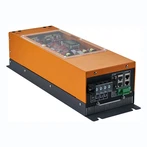
How It Excels in Compact UV Scenarios
Desktop UV applications-from small-scale 3D resin printing to laboratory experiments and home-based crafting-require a power supply that's as space-efficient as the equipment it powers. The WBTA Series is often touted for its compact design, but a key question lingers: Does WBTA fit desktop applications? The answer is yes, and its 适配性 goes beyond just size-it's engineered to meet the unique needs of desktop users, including easy installation, low noise, and compatibility with small UV devices.
To appreciate why WBTA fits desktop applications, let's first define what "desktop applications" entail. These are scenarios where the UV equipment is small enough to sit on a desk or workbench (e.g., desktop 3D printers, small UV curing boxes, lab benchtop disinfection tools) and typically uses low to moderate power (100W–500W). For these users, space is at a premium, and complexity is a dealbreaker-they need a supply that's easy to set up, quiet to run, and doesn't require extra room for wiring or cooling.
1. Compact Size: Designed for Tight Desktop Spaces
The WBTA Series' most obvious advantage for desktop use is its size. Most models measure just 250×180×120mm-smaller than a standard laptop-and weigh under 3kg. This means it can fit neatly on a desk next to a desktop 3D printer or curing box, without taking up valuable workspace. For example, a hobbyist using a 150mm×150mm desktop resin printer can place the WBTA supply right beside the printer, with enough room left for tools and materials.
Compare this to industrial supplies like the HLTA Series (which can be 300×200×150mm or larger) or even mid-range supplies-WBTA's compact footprint is a game-changer for home workshops or small labs. A university chemistry lab in Oregon, which uses WBTA supplies for benchtop UV disinfection of petri dishes, noted that they can fit two WBTA units on a single lab bench-something they couldn't do with larger supplies.
2. Plug-and-Play Installation: No Technical Expertise Needed
Desktop users-whether hobbyists or students-often don't have the technical knowledge to wire complex power supplies. The WBTA Series solves this with plug-and-play functionality. It comes with a standard AC power cord (compatible with 120V/240V outlets) and a simple DC connector for the UV lamp. Users just need to:
Plug the WBTA supply into a wall outlet.
Connect the DC cable to the UV lamp or device.
Turn it on and adjust the power (via a front-panel knob).
There's no need for wiring diagrams, soldering, or compatibility checks-even beginners can set it up in 5 minutes or less. A home crafter in Arizona, who uses a WBTA supply for curing UV resin jewelry, shared: "I'm not good with electronics, but setting up WBTA was easier than assembling furniture. I plugged it in, connected my curing light, and started making jewelry the same day."
3. Quiet Operation: Ideal for Home & Lab Environments
Desktop applications often take place in quiet spaces-like home offices, bedrooms, or labs-where loud equipment is a nuisance. The WBTA Series uses a low-noise cooling fan (≤45dB) that's quieter than a standard computer fan. This means it won't disrupt conversations, focus, or lab work. For example, a student using a WBTA supply for a UV-induced chemical reaction in their dorm room can run the supply without disturbing roommates.
In contrast, larger supplies with high-power cooling fans (like the HLTA Series, which can be 55dB or louder) are too noisy for desktop use. A small design studio in New York, which uses WBTA supplies for curing small 3D-printed prototypes, noted that the quiet operation allows their team to work without wearing ear protection-unlike when they previously used a louder generic supply.
4. Compatibility with Desktop UV Devices
Not all compact supplies work with common desktop UV equipment-but WBTA is engineered to be versatile. It supports a wide range of low to moderate power UV lamps (100W–500W) and output voltages (1000V–2000V DC), making it compatible with:
Desktop Resin Printers: Most consumer-grade resin printers use 100W–200W UV lamps, which the WBTA Series can power easily.
UV Curing Boxes: Small curing boxes (for resin, nail polish, or small parts) often require 150W–300W power-WBTA's 40%–100% power adjustment lets users fine-tune curing time.
Lab Benchtop Tools: Benchtop UV disinfection lamps or photochemical reaction devices (used in biology and chemistry labs) typically use 200W–500W lamps-WBTA's stable output ensures accurate results.
A tech startup in Colorado, which develops small UV sensors for air purification, uses WBTA supplies to test their sensors. They found that WBTA's compatibility with different lamp sizes (from 100W to 500W) allowed them to test a range of sensor models without buying multiple supplies.
5. Safety Features for Desktop Users
Safety is a top concern for desktop users, especially those working at home or in labs with limited supervision. The WBTA Series includes essential safety features to prevent accidents:
Overcurrent Protection: Shuts off power if the lamp draws too much current (e.g., due to a short circuit), reducing fire risk.
Thermal Shutdown: Turns off the supply if internal temperature exceeds 60°C-critical for desktop setups where ventilation might be limited.
Insulated Housing: The outer casing is made of flame-retardant plastic, preventing electric shocks if the supply is touched accidentally.
These features give users peace of mind-whether they're a parent using the supply for a child's craft project or a lab technician running experiments.
Conclusion: WBTA Is the Perfect Fit for Desktop UV Applications
For anyone using UV equipment in a compact, low-power desktop setting, the WBTA Series checks all the boxes: small size, easy installation, quiet operation, compatibility, and safety. It's not just a "compact supply"-it's a supply designed specifically for the needs of desktop users. Whether you're a hobbyist, student, or small business owner, WBTA ensures that you can run your desktop UV devices efficiently, without sacrificing space, peace, or safety.